

The Truth About Caffeine: When and How to Use It for Maximum Energy

|
Key Takeaways
|
You use caffeine for energy. Sometimes, though, it feels like caffeine gives you speed instead of progress. You get the first-hour lift. Then the jitters set in, followed by the crash, followed by the late-night cycle of wondering why you’re still awake.
The issue isn’t caffeine. It’s timing, dosage, and using caffeine for the wrong purpose. In this blog, you'll learn how caffeine boosts energy, how caffeine timing for focus can shape your day, and when a product like Liquid Focus may make sense.
The Caffeine Trap That Makes You More Tired
You drink a lot of coffee after waking up, and you feel alert. But after a few hours, the alertness goes away, and you drink another cup. A few more, and then you can’t fall asleep.
You wake up the next morning feeling tired and start the process all over. The problem isn’t the alertness. It’s how long it takes to actually get the job done.
Signs You’re Misusing Caffeine:
-
Irritability
-
Restlessness
-
Upset stomach
-
Rapid heartbeat
-
Trouble sleeping
Caffeine makes you more alert. It can sharpen focus for a while. But it won’t help you pay off your sleep debt. If you’re sleep-deprived, that doesn’t go away.
How Caffeine Boosts Energy
Caffeine doesn’t actually create energy. It blocks the signals that make you feel sleepy. If you keep shutting off that signal all day, the energy crash can hit harder later.
Adenosine and the Crash That Follows
Throughout the day, adenosine builds up in your brain. The more it builds up, the sleepier you become. Caffeine, however, occupies those same receptor sites, temporarily delaying the onset of sleepiness.
When the caffeine leaves your body, the adenosine catches up, which helps explain the “crash” that follows. This is why caffeine later in the day can backfire.
Why Caffeine Can Feel More Stressful Than Sharp
For some people, caffeine doesn’t feel clarifying. It feels chaotic.
Common Symptoms:
-
Jitteriness
-
Nausea
-
Anxious energy
-
Palpitations
If your nervous system is already on edge, caffeine can just heighten the static. On those days, hydration, food, or a smaller dose may be the better call.
Caffeine Timing for Focus That Actually Works
This is your caffeine timing guide for focus. Sensitivity varies, so self-awareness matters. Late caffeine can disrupt sleep and fuel next-day fatigue.
The 60-90 Minute Morning Delay Rule
Rather than reaching for caffeine right after you wake up, try to wait 60 to 90 minutes. Caffeine can feel more effective after your body has naturally booted up.
Try This:
-
Drink some water first.
-
Take a short walk or eat breakfast.
-
Then have your caffeine.
That's it. A simple adjustment that can lead to steadier energy.
The Best Cutoff for Focus and Sleep
Mid-morning and early afternoon are usually good windows for caffeine. After 3 p.m., caffeine can disrupt sleep for many people. For the average adult, it can stick around for 6-8 hours or even longer.
If you’re particularly sensitive to caffeine, an even earlier cutoff, such as noon, might be the smarter choice. Tonight’s sleep helps shape tomorrow’s focus.
Match Your Caffeine Dose to the Task
Not every task calls for the same caffeine strategy:
-
Deep Work (writing, analysis, building): For deep work, steady energy usually works better than a big spike. Smaller doses may be enough, especially if you're starting to fade.
-
Social Performance (meetings, presentations): For meetings and presentations, you want alertness without feeling wired. If you already feel energized, you may not need a dose at all.
-
Physical Performance: Timing matters for physical performance. Caffeine may work better when you take it closer to the point when your energy starts to dip, rather than too early.
A few quick checks can help you decide whether caffeine is the right move:
-
If you’re already tired, a smaller dose may be the better call.
-
If you’re already feeling on edge, it may be better to skip caffeine.
-
If you’re already sleep-deprived, sleep may help more than another dose.
If you're already tired, don't try to fix it with extra caffeine late in the afternoon.
Caffeine for Productivity Without the Jitters

If your goal is to use caffeine for productivity, not just stimulation, a few habits are worth avoiding. Drinking coffee on an empty stomach, mindlessly going back for multiple cups, and using caffeine when stress is already high can all increase jitters without improving focus.
A smarter strategy is to eat first, choose one caffeine window, and stop “sipping for comfort.” Pay attention to the label, since caffeine amounts can vary widely. Track your total intake instead of guessing. While caffeinated beverages can add to your daily fluid intake, water should still be your baseline.
Why Your Usual Caffeine Dose Stops Working
Ever notice that you need more caffeine to get the same effect? That’s called tolerance.
Over time, your body can get used to caffeine. Your brain may make more adenosine receptors, which can mean needing more caffeine to block the same sleepy signals.
Common withdrawal symptoms include headaches, irritability, and fatigue. They can show up when your body is used to a certain amount of caffeine, such as 300 mg a day, and then suddenly gets less. That’s why cutting back can feel harder than expected.
Instead of stopping all at once, try cutting back gradually by adding a few low-caffeine days and paying attention to your timing, intake, and sleep quality for a week or so. That will tell you more than guessing.
How Much Caffeine Is Too Much
For most healthy adults, 400 mg per day is generally considered safe. Too much caffeine can show up in a few familiar ways:
-
Insomnia
-
Nervousness
-
Rapid heartbeat
-
Shakiness
-
Stomach discomfort
During pregnancy, it’s often recommended to keep caffeine intake under 200 mg per day, and it’s a good idea to check with your healthcare provider. Some people are also more sensitive to caffeine than others, and it can interact with certain medications.
Support Your Sleep to Support Tomorrow
If you want caffeine to support productivity, not just stimulation, sleep still has to stay part of the plan. Coffee on an empty stomach can trigger jitters. Mindless sipping is hard to track.
Leaning on caffeine when stress is already high can leave you feeling more wired than focused. Small habits like these can add up fast and work against the clarity you’re trying to create.
A simpler approach is to be more deliberate:
-
Eat first.
-
Choose one caffeine window.
-
Stop sipping for comfort.
-
Read the label, since caffeine amounts can vary, and track your total intake.
-
While caffeinated beverages can add to your daily fluid intake, water should still be your baseline.
A few small adjustments today can make it easier to stay focused now and sleep better tonight.
Take Liquid Focus When You Want Focus, Not Just Wakefulness

While coffee is often about wakefulness, Liquid Focus is designed to support focus, mental performance, and energy with a smoother feel. Use the right tool for the right moment, while keeping your own caffeine sensitivity in mind.
When to Take Liquid Focus for Best Results
Each serving of Liquid Focus contains 150 mg of caffeine. It combines caffeine with L-theanine, a pairing often used to support a smoother focus and energy experience.
-
L-carnitine
-
Mucuna pruriens extract
-
L-theanine
-
Panax ginseng extract
-
Huperzia serrata extract
-
Vitamins
-
Electrolytes
-
Caffeine
It contains no artificial colors and is designed to support focus, mental performance, and energy.

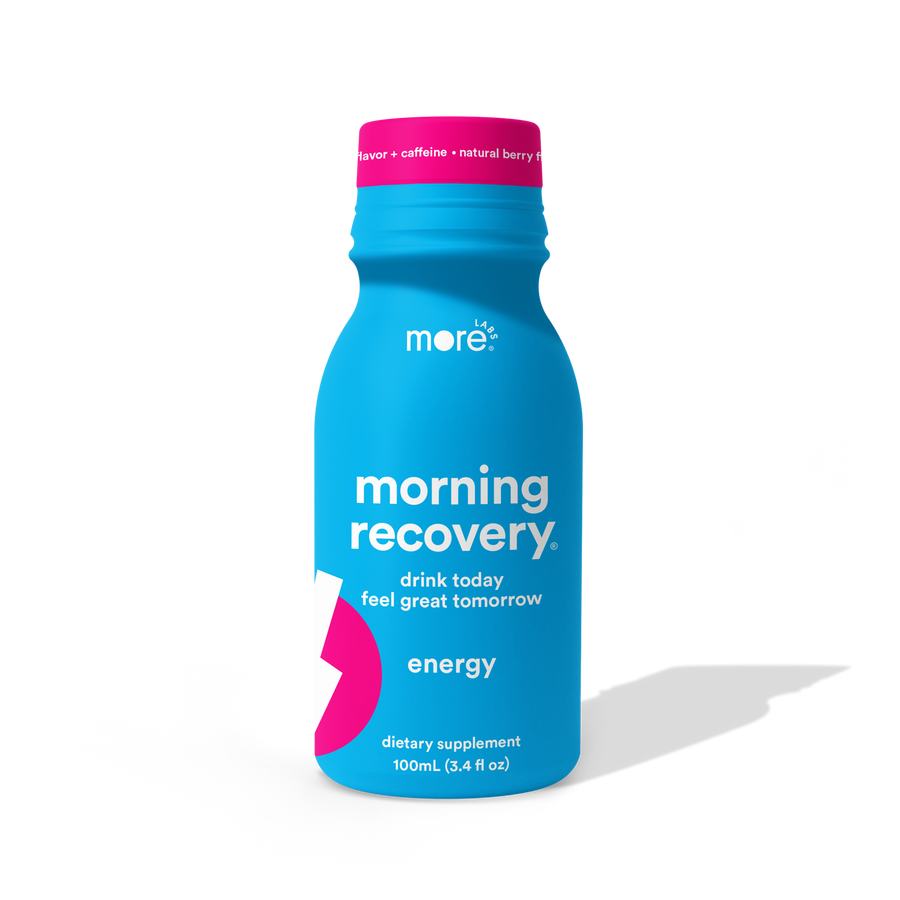

Try Liquid Focus for Smoother Energy
When it comes to caffeine and productivity, keep the plan simple: delay your first dose, time caffeine to the task, and protect a firm sleep cutoff so tomorrow feels easier.
If coffee leaves you awake but scattered, the answer may not be more caffeine. It may be better timing and a smoother approach.
Liquid Focus pairs caffeine with L-theanine in a formula designed to support focus, mental performance, and energy when you need to get things done.
Use caffeine with better timing, and reach for More Labs Liquid Focus when you want smoother, more focused energy.
Disclaimer:
† These statements have not been evaluated by the Food and Drug Administration. These products are not intended to diagnose, treat, cure, or prevent any disease.
|
The Bottom Line: The issue isn’t caffeine. It’s how you use it. If you can delay the first dose, match the amount to the task, and set a firm sleep cutoff, caffeine can help you stay sharp today without stealing from tomorrow. |


